A fascinating coastal dweller: the cut trough shell
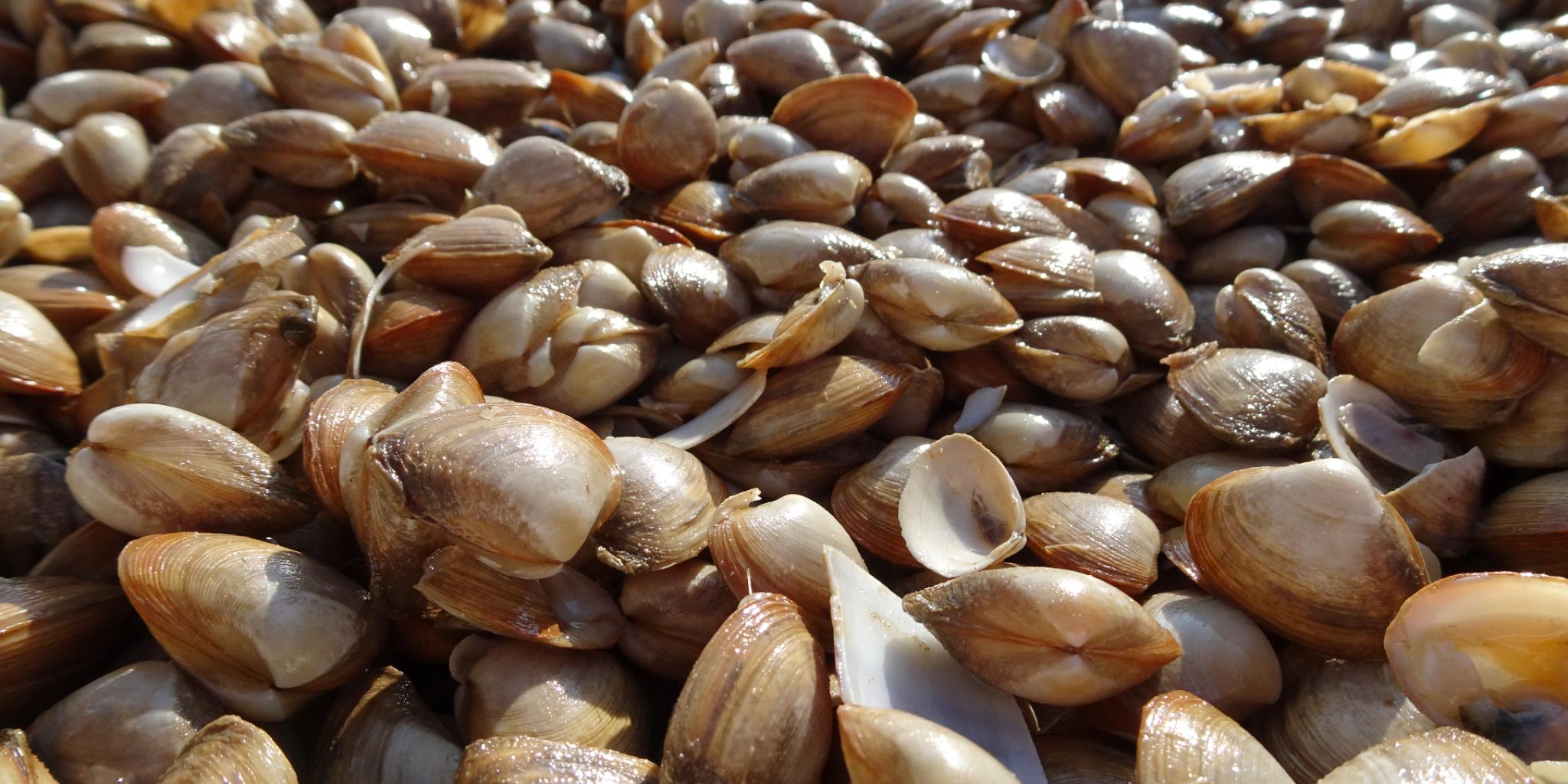
Cut trough shell (Spisula subtruncata). (photo: Jetze van Zwol)
A small mollusc inhabits our coastal waters: the cut trough shell. This animal thrives best in shallow seas with fine sand and mild weather conditions. Not only natural factors play a role in population dynamics: trawlfishing, targeting shrimps and flatfish, also affects numbers. However, why the numbers of this shellfish increase spectacularly in some years and almost disappear in others remains a mystery. This is according to a joint study by Wageningen Marine Research and the Royal Netherlands Institute for Sea Research (NIOZ), based on a 27-year time series and published in Frontiers in Marine Science.
The the cut trough shell (Spisula subtruncata) is an important link in the food web of the Dutch coastal zone. It serves as a food source for the common scoter and is also a species of interest for fisheries.
Incomprehensible comeback
But the species has an eventful history: after a large increase in Spisula numbers around 2000, the population collapsed. Years of scarcity followed, until the species unexpectedly recovered in 2017. What causes the striking fluctuations in the population, which affect the ecosystem and fisheries?
Spisula flourishes locally, provided fisheries are balanced
Scientists from the Royal Netherlands Institute for Sea Research (NIOZ) and Wageningen Marine Research conducted a statistical analysis on these long-term changes. This showed that Spisula mainly occurs in specific locations along the Dutch coast, such as the North Holland coast and the area north of Ameland. In general, the cut trough shell thrives best in areas with fine sand, during years with higher winter temperatures and few storms during the larval settlement period. The habitats of these shells overlap with fishing areas for shrimp and flatfish. Within these areas, lower densities of Spisula were observed at sites where fishing was more intensive.
Unknown influences on Spisula stocks
The above causes explain only part of the changes in the populations of the cut trough shell. However, the cause of the annual fluctuations remains unclear, as it cannot be explained by the mentioned factors. Possible explanations, such as the influence of sand nourishment, could unfortunately not be tested due to a lack of sufficient data.
Moreover, changes in the habitat, such as marine warming due to climate change, mean that important controlling factors may also change. This makes long-term research on shellfish and their habitats important for proper management of our coastal areas.
Cut trough shell (Spisula subtruncata). (photo: Jetze van Zwol)
Linked staff
Katja Philippart
Research Leader

Jim de Fouw
Postdoc

Cut trough shells in a bucket on a boat

Cut trough shells in a bucket on a boat. (photo: Marleen Annema)