Diepzee koralen, walvissen en inktvissen
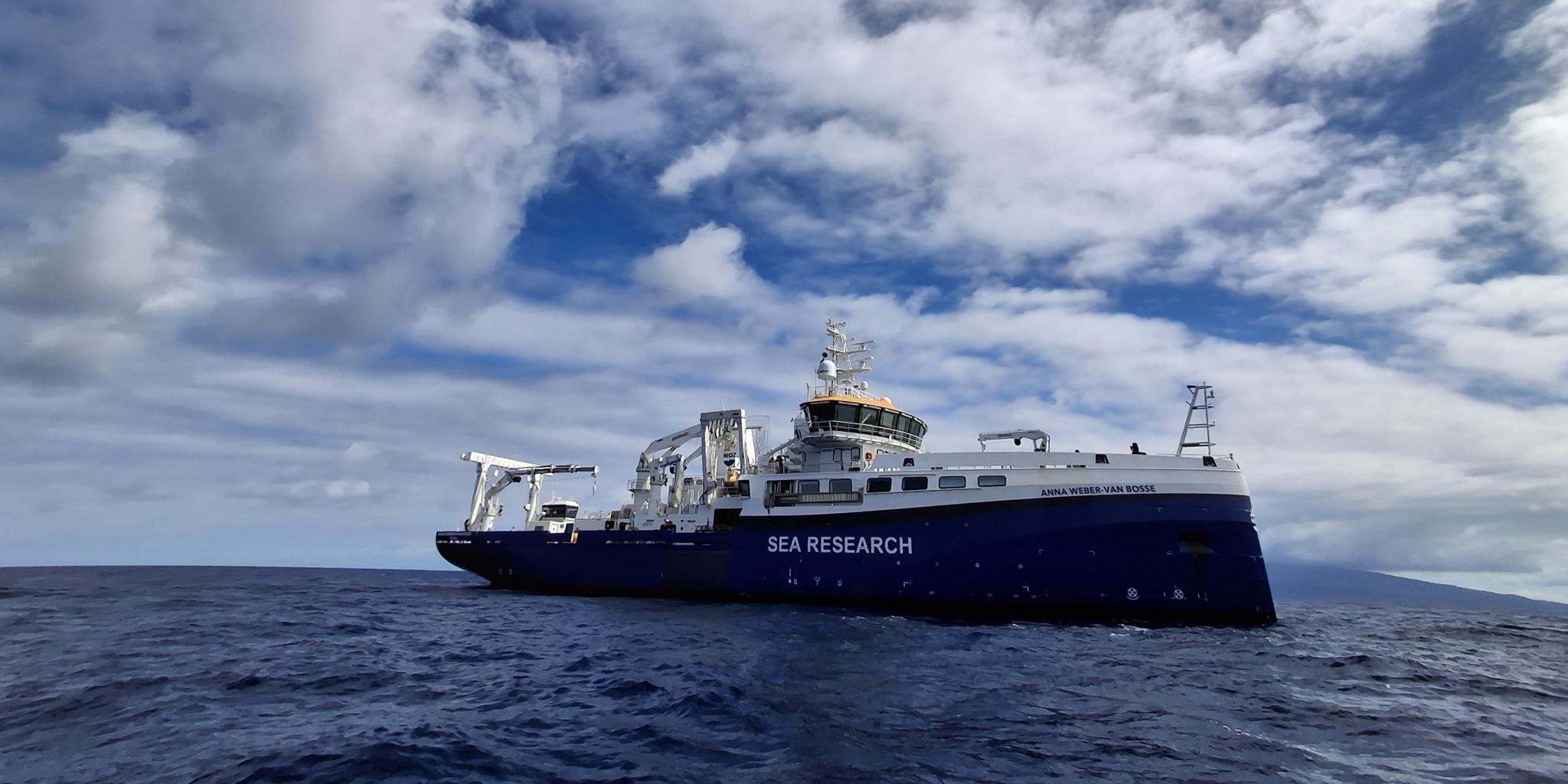
RV Anna Weber-van Bosse vanuit het persfectief van een walvis (Foto: NIOZ)
Deze expeditie aan boord van de RV Anna Weber-van Bosse van 11 tot en met 22 september combineert het diepzee-project van Fleur Visser over jagende walvissen uit 2026 met het CONDOR-project waarbij de diepzee-ecosystemen in de buurt van de Azoren worden onderzocht.
Introductie
Door Fleur Visser, Chief Scientist NIOZ
Welkom aan boord van de Anna Weber van Bosse! We zijn onderweg voor onze onderzoeksexpeditie voor de kust van de eilanden Terceira en Faial van de Azoren, om te onderzoeken hoe (en waarom?) walvissen in de diepzee foerageren, in het kader van het NWO-project ‘Tracing top-predator prey interactions into the deep sea’. En om te verkennen hoe we ecosystemen op de diepzeebodem kunnen herstellen, in het kader van het EU-project REDRESS.
Hiervoor combineren we verschillende methoden, in een team van wetenschappers en bemanningsleden met een breed scala aan expertise. De diepzee is een enorm ecosysteem, dat moeilijk te bereiken en te observeren is. Het combineren van vaardigheden en technieken is bijna een must om vooruitgang te boeken. Ons team bestaat uit diepzee-ecologen, oceanografen, walvis- en inktvisbiologen, bio-akoestici, diepzeetechnici, theoretische ecologen, bentische diepzee-ecologen en eDNA-specialisten – plus een zeer ervaren bemanning van het onderzoeksschip. We observeren en registreren de diepzee met behulp van echoloden, hydrofoons, videotransecten, E-DNA- en nutriëntenbemonstering. We plaatsen ook verankeringen voor langetermijnregistratie van roofgedrag in de diepzee, en landers om het gedrag en de groei te volgen van de koralen die weer op de diepzeebodem worden teruggeplaatst. Sterker nog: ik, als walviswetenschapper, houd momenteel de prooidieren van walvissen in de gaten waarnaar ik op zoek ben – diepzee-inktvissen en octopussen – tijdens een videotransect op een koraalherstelgebied, dat wordt beheerd door onze oceanografie- en koraalspecialisten.
Kijk mee aan boord, en doe, als je geïnspireerd raakt, misschien ook mee aan onze haiku-wedstrijd.
squid is hard to find
we must behave like whales, to
write in sepia
Luisteren naar de diepte: lange termijn akoestische monitoring van walvisachtigen op de Azoren
10-11 september door Jace Fuller, Simone Baumann-Pickering en Bruce Thayre
In de 24 uur voorafgaand aan het ophalen van onze verankeringslijn voor de kust van Terceira hebben we een opmerkelijke reeks van zes soorten walvisachtigen waargenomen. Potvissen domineerden de namiddag; spitssnuitdolfijnen, valse orka’s en niet-geïdentificeerde dolfijnen waren in de vroege ochtenduren in groten getale aanwezig. Hieronder geven we een overzicht van wie we zijn, waar we aan werken — en wat de oceaan ons heeft verteld.
Namens de Marine Bioacoustic Research Collaborative, Scripps Institution of Oceanography aan de Universiteit van Californië in San Diego, zijn Dr. Simone Baumann-Pickering, hoofdonderzoeker van het Acoustic Ecology Lab; Bruce Thayre, marien technicus; en Jace Fuller, een promovendus bij het Acoustic Ecology Lab aan boord.
Ons langetermijndoel is het monitoren van de dichtheid van walvisachtigen en hun prooidieren voor de kust van het eiland Terceira en het in verband brengen van het duikgedrag van walvisachtigen met prooidieren en oceanografische omstandigheden, om zo meer te weten te komen over de dynamiek tussen roofdier en prooi en de interacties tussen soorten. Tijdens deze expeditie hebben we een verankeringsinstallatie teruggehaald die een jaar lang had gedraaid; de foto’s en akoestische gegevens van walvisachtigen in dit bericht zijn daar afkomstig van. We zijn van plan een soortgelijk verankeringssysteem te plaatsen voor nog een jaar aan gegevens, evenals een klein passief akoestisch verankeringssysteem voor nog een jaar aan waarnemingen, waarmee dit ons zesde jaar van metingen wordt.
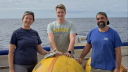
Simone Baumann-Pickering, Jace Fuller en Bruce Thayre met de opgehaalde boei
Onze met meerdere instrumenten uitgeruste verankering omvatte een continu bemonsterend High-frequency Acoustic Recording Package (kortweg HARP) om geluiden van walvisachtigen en andere omgevingsgeluiden vast te leggen, actieve akoestische visserij-echoloden (Simrad Wideband Autonomous Transceiver, WBAT) om terugkaatsingslagen in de gehele waterkolom te identificeren en prooidieren te lokaliseren, en oceanografische sensoren (Sea-Bird microCAT) om temperatuur, zoutgehalte en opgeloste zuurstof op verschillende dieptes te meten. Met behulp van deze instrumenten kunnen we de akoestische aanwezigheid van walvisachtigen in verband brengen met de fysische en biologische structuur van de waterkolom.
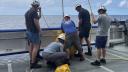
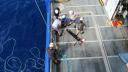
Het team zet de grote gele oppervlakteboei vast op het dek (Foto: NIOZ)
De Simrad Wide-Band Autonomous Transceiver (WBAT) wordt aan boord gebracht
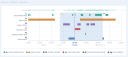
Overzicht van gevonden soorten op 10 en 11 september (Credit: Marine Bioacoustic Research Collaborative)
Voorbeeld van opnames van echolocation kliks van potivs en spitssnuitdolfijn van Cuvier (Credit: Marine Bioacoustic Research Collaborative)
Hierboven hoor je een kort fragment van de akoestische gelaagdheid van twee diepzee-voedselzoekers. De reeks echolocatieklikken met lagere frequentie van de potvis vormt de basis van het geluidsbeeld onder de 30 kHz, terwijl de frequentiegemoduleerde echolocatiepulsen van de spitssnuitdoflijn van Cuvier door het hogere register snijden — twee soorten die op hetzelfde moment complementaire akoestische niches in de diepzee innemen.
De spectrogrammen zijn afkomstig van een autonoom hoogfrequent akoestisch opnamepakket (HARP) dat op 10–11 september 2026 bij de Azoren is ingezet. Bovenste paneel: langetermijnspectraal gemiddelde (LTSA), tijdgemiddelde = 5 s, FFT = 1000 punten, bemonsteringsfrequentie = 200 kHz. Onderste paneel: detailfragment met banddoorlaatfilter (2–98 kHz). De kleur geeft de signaalamplitude aan, waarbij warmere kleuren hogere amplitudes aangeven.
In the deep blue sea
we recorded marine life
myst'ries to be solved
Van eDNA tot prooidieren van walvissen
Door Ina Vornsand, PhD student, GEOMAR en Clara Planitz, MSc student, GEOMAR
Heb je je ooit afgevraagd hoe je die dieren in de diepe oceaan zou kunnen bestuderen die niet te vinden zijn met gebruikelijke bemonsteringsmethoden zoals netten en videoduiken? Dat is precies wat wij doen door zogenaamd eDNA te verzamelen uit watermonsters tussen het oppervlak en de diepzee. Terwijl dieren in de oceaan leven en zich verplaatsen, laten ze genetisch materiaal achter, waaronder weefselcellen, uitwerpselen of slijm – net zoals wij haren of huidschilfers verliezen – en dit materiaal bevat DNA dat we kunnen gebruiken om het organisme te identificeren waarvan het afkomstig is. Door het eDNA in de oceaan te analyseren, kunnen we een beeld schetsen van de biodiversiteit op verschillende dieptes zonder dat we de dieren hoeven te zien of te vangen.
De afgelopen dagen hebben we watermonsters genomen met behulp van flessen aan een CTD-rosette en deze vervolgens gefilterd via een membraan met zeer kleine poriën om alle soorten DNA op te vangen. Aangezien dit proces zeer gevoelig is voor verontreiniging, moesten we er altijd voor zorgen dat we zorgvuldig en zo steriel mogelijk te werk gingen, met veel reinigingsstappen tussendoor en voor en na de daadwerkelijke bemonstering. De verzamelde monsters werden uiteindelijk ingevroren bij -80 °C om het daarin aanwezige DNA te behouden. Ons belangrijkste werk op het schip bestond uit het nemen van de monsters; alle daaropvolgende analysestappen (extractie, voorbereiding van de bibliotheek) zullen in het laboratorium van ons instituut worden uitgevoerd.
Leuk, dus we kunnen zien welke dieren er waren, maar waarom is dat eigenlijk nuttig? Nou, ten eerste is de diepzee nog steeds het laatste onontgonnen gebied op aarde. Onze kennis over de oceanen buiten de kustgebieden is nogal beperkt. Dit soort basisonderzoek naar de samenstelling van oceaangemeenschappen is dus op zich al een uiterst belangrijke taak. Bovendien kunnen we uit onze gegevens informatie afleiden over de voedselketen en de dynamiek tussen roofdieren en prooidieren voor de kust van de Azoren, en dat is waar we vooral in geïnteresseerd zijn. Onze bemonsteringslocaties zijn specifiek gekozen om binnen bekende foerageergebieden van walvisachtigen te liggen (Risso’s dolfijn, Sowerby’s spitssnuitdolfijnen en potvis), maar onze monsters zullen worden geanalyseerd op genetische sporen van hun prooidieren, namelijk vis- en inktvissoorten. Op die manier kunnen we een beeld krijgen van de verspreiding van de prooidieren en hun relatie tot het jachtgedrag van de walvissen. De eDNA-gegevens zullen uiteindelijk ook een aanvulling vormen op de akoestische en beeldgegevens van het gekoppelde systeem van de videohopper en de WBAT, die vragen over biodiversiteit en de verspreiding van prooidieren vanuit een andere invalshoek benaderen.
Haliphron, where have you gone?
Why all these days of avoiding me?
Haliphron, please come find me!
(Door Ina Vornsand: Haliphron atlanticus, oftewel de zevenarmige octopus, is een favoriete prooi van potvissen, maar is zelden levend waargenomen)
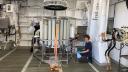
Monster nemen met de CTD. Van links naar rechts: Luís, Ina, Clara.
Het leven aan boord als beginnende wetenschapper
Door Clara Planitz, MSc student, GEOMAR
Voordat ik aan boord ging van de Anna Weber van Bosse wist ik niet goed wat ik kon verwachten. Natuurlijk had ik al eerder van mijn collega’s allerlei geweldige verhalen gehoord over reizen op onderzoeksvaartuigen. Over de wetenschap die je live meemaakt, over het feit dat er altijd experts in hun vakgebied in de directe omgeving zijn, en over het omgaan met de sociale kant ervan. Maar ik ben iemand die over alles wel duizend keer nadenkt. Ik moet de ervaring eerst een keer meemaken, voordat ik me er prettig bij voel (niet ideaal, ik weet het). Dus, met nauwelijks enig idee van wat er zou gaan gebeuren en hoe ik het werk moest doen waarvoor ik daar was, werd ik zomaar halsoverkop in het avontuur gegooid.
De eerste paar dagen waren zwaar. Ik moest wennen aan het leven en werken op zee, terwijl ik overweldigd werd door de nieuwe omgeving en het constante lawaai van het schip. Ik deed meerdere dutjes van anderhalf uur, ook al had ik op die dagen niet veel te doen. Zelfs na meer dan een week op zee word ik nog steeds ontzettend moe. Mij is verteld dat dit volkomen normaal is en dat het op dit moment al beter gaat. Tot nu toe heb ik twee wijze lessen geleerd – één van de bemanning en één van de wetenschappers. Ten eerste moet je je maag gevuld houden om misselijkheid te voorkomen. Salade is daar ideaal voor – het vult je maag en geeft je maag iets te verwerken. Ten tweede is gele tape goed voor alles. Moet je iets ergens vastzetten? Gele tape. Iets repareren? Pak gele tape. Iets labelen? Je kunt de gele tape gebruiken! Dit is zo ver gegaan dat ik zelfs een kapotte telefoonhanger met gele tape heb gerepareerd. Het is echt handig, dat kan ik niet ontkennen.
Sacred yellow tape
Is good for everything –
Do not eat it though!
Om een diepere boodschap over te brengen dan alleen maar „Gele afzetlint is te gek“ – heb ik een paar zeer inspirerende woorden voor het laatst bewaard: als je ooit met wetenschappers hebt gesproken over werken op zee, kun je ze geloven als ze zeggen dat het ontzettend leuk is. Iedereen staat open voor een gesprek, beantwoordt je vragen en doet ook wel eens iets niet-wetenschappelijks als ze daar tijd voor hebben. Je kunt contact leggen met wetenschappers van over de hele wereld die je anders waarschijnlijk nooit zou ontmoeten. En dat alles zonder al te veel druk, want zij richten zich op hun deel en jij op het jouwe. Mijn ervaring is ook dat ze heel begripvol zijn als je tijd voor jezelf nodig hebt en tijd om aan het leven op zee te wennen. Houd je eigen tempo aan en stel je open als je daar sociaal gezien de energie voor hebt (zij zullen waarschijnlijk ook wat tijd nodig hebben om op gang te komen). En tot slot wilde ik nog even zeggen: het is oké om bang te zijn om aan boord van een onderzoeksschip te gaan. Het is een grote stap. Maar als je de kans en de mogelijkheid hebt, ga het dan toch doen, ook al ben je bang. Het is het waard!
Blijf nog even hangen om te horen over het wetenschappelijke werk waarvoor ik hier ben. Dit is een voortdurende leerervaring :)
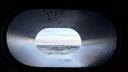
Het uitzicht vanuit mijn raam als we op zee zijn (als er veel golven zijn, beuken die er soms tegenaan en vullen het raam helemaal).
Onze echoloden brengen de biomassa in de diepzee in kaart
Door Emma Bronswijk, PhD student, NIOZ
Het is onze vierde dag aan boord en we werken inmiddels als een geoliede machine. Het is pas 8 uur ’s ochtends en we hebben het videoframe al uit het water gehaald en het CTD-frame erin geplaatst. Via de radio horen we Federicio’s Nederlands met Italiaans accent kraken tegen de lierbediener: “Naar de bodem, graag!” Ondertussen brengt Ina de laatste steriele kannen naar het eDNA-lab. Op het dek wordt een van de WBAT’s al klaargemaakt voor de volgende inzet.
De WBAT is een autonome echolood, die we gebruiken om de verspreiding van de prooidieren van diepduikende tandwalvissen – dat wil zeggen vis en inktvis – te meten. Met ons systeem kunnen we vis en inktvis tot op een diepte van 1800 m detecteren. We hebben twee zogenaamde WBAT’s op het Hopper-videokader gemonteerd. Dit bracht ons op het idee voor de pakkende naam: ‘de double whopper’. Furu huivert echter elke keer als ze het woord ‘Hopper’ hoort, omdat het Hopper-frame al heel lang niet meer ‘hoppert’, aangezien er inmiddels geavanceerdere methoden voor het maken van foto’s zijn ontwikkeld. Furu bedacht het pakkende alternatief ‘twee breedbandige autonome zendontvangers (WBAT’s) gemonteerd op het vastgebonden camerasysteem’. Andere suggesties zijn welkom.
Terwijl het WBAT-systeem zich klaarmaakt voor zijn volgende afdaling, rolt Daisy de vislijn uit die aan de kalibratiebal is bevestigd. Deze perfect ronde bal zal onder de WBAT hangen om de prestaties van het systeem te controleren onder de wisselende druk van de diepzee. Nadat de CTD weer aan dek is, daalt het videoframe af naar 1400 m. Tijd om te genieten van live HD-camerabeelden van de diepzee!
Daisy is druk bezig met aantekeningen maken in PelNav: ‘vis op cam1’, ‘physonect op cam2’, ‘ctenofoor op bodemcamera’. Ondertussen rolt er een zweetdruppel over het voorhoofd van Jesse terwijl ze uren aan HD-videogegevens van eerdere inzetbeurten naar meerdere harde schijven op vier verschillende laptops kopieert (om het proces te versnellen). Hopelijk zijn er ten minste twee schijven klaar voor de volgende inzet. Plotseling schiet er een inktvis voorbij, met een groenachtige inktwolk in zijn kielzog. Iedereen in het drylab juicht van opwinding. En dan, zomaar ineens, is het tijd om de dubbele whopper voor het avondeten weer aan dek te halen.
Voor de meesten eindigt de dag met een adembenemende zonsondergang en dolfijnen naast het schip. Maar niet voor iedereen... Voor Daisy en Jesse gaat de zoektocht verder. Ze brengen het videosysteem weer naar de diepzee en gaan op zoek naar wat de nacht te bieden heeft.
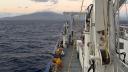
De beste plek om op het schip te staan (naar mijn mening). Met Terceira op de achtergrond en al die coole wetenschappelijke instrumenten en de plek waar ze te water worden gelaten, recht voor je neus.
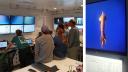
Wetenschappers die op passanten wachten op de videobeelden van de Hopper in het Dry Lab & zo’n bezoeker!
Op zoek naar walvissen
Door Daisy Greuter, MSc student, University of Amsterdam & NIOZ
Vandaag begonnen we met het zoeken naar walvissen vanaf de brug. We probeerden te beslissen of we met de kleine boot zouden uitvaren om poepmonsters te verzamelen van diepduikende walvissen, om zo hun voedingspatroon te bestuderen. Potvissen vlakbij het schip!
We overlegden met de brug en kregen veiligheidsinstructies, die vooral belangrijk waren wanneer de kleinere boot de zee in wordt gesleept en weer omhoog wordt gehesen. En daar gingen we, samen met twee bemanningsleden begaven we ons naar de laatst bekende locatie van de potvissen. Deze dieren kunnen langdurige duiken maken om voedsel te zoeken en het is belangrijk om een idee te krijgen van hun richting en timing. Luis en Jesse hielden vanaf de brug de boel in de gaten om ons te ondersteunen. We zochten een tijdje, in de hoop de spuitkolommen weer te zien en mogelijk foto’s te maken voor foto-identificatie. Na even wachten zagen we ze weer opduiken en konden we dichtbij komen. We maakten foto’s van hun staartvinnen, waaraan ze kunnen worden geïdentificeerd. Op de terugweg hadden we een prachtig uitzicht op het schip en werden we vergezeld door een grote groep gevlekte dolfijnen, een mooie afsluiting van de zoektocht.
Toen we terugkwamen bij de AWvB hebben we ’s nachts nog een hopperoperatie uitgevoerd, in een poging de echoloden te kalibreren. Tijdens de kalibratieduiken wordt er een ‘kalibratiesfeer’ – een zeer dure metalen bal – aan het hopperframe bevestigd als referentiedoel. Op basis van de eigenschappen van de bol weten we hoeveel echo deze zou moeten produceren. De bol was met vier vislijnen aan het frame bevestigd, maar terwijl we tijdens een filmavond in de lounge zaten te kijken, zagen we dat er één was gescheurd. Ik twijfelde aan mijn knoopvaardigheden en vroeg me af of ik echt elke verbinding had gecontroleerd, zoals we altijd doen voordat het frame binnenkomt. We zagen ook een zwaardvis op de opname, kort voordat we wisten dat de lijn was gebroken. Via de radio grapte iemand dat de zwaardvis de lijn misschien had doorgesneden. Zonder de bemanning konden we de hopper niet weer omhoog halen, dus moest hij 's nachts blijven hangen.
De volgende dag bekeek ik de camerabeelden om alle inktvissen en andere interessante dieren eruit te knippen. Toen ik naar de ontmoeting met de zwaardvis keek, begreep ik waarom de vislijn was gebroken. Verwacht het onverwachte als je op zee werkt.
Sabotaging swordfish
Our precious tungsten calibration sphere
Attacked by the weapon of the sea
Innocent, clinging to the lines
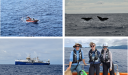
Walvisspotten vanaf een kleine boot.
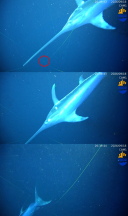
Zwaardvis pleegt sabotage
Interesse wekken
Door Luís MD Barcelos, PhD student, University of the Azores
Het mariene milieu, buiten de kustgebieden en onder het wateroppervlak, vormt een grote uitdaging als het gaat om het opsporen en bestuderen van soorten. De meeste van deze soorten zijn zeer ongrijpbaar en zeer mobiel, waardoor hun opsporing en bestudering alleen mogelijk is door het gebruik van technologische hulpmiddelen zoals eDNA.
Deze methode maakt het mogelijk om de aanwezigheid te onderzoeken van soorten waarvan al bekend is dat ze op de Azoren voorkomen, maar die nog niet in dat studiegebied of op een bepaalde diepte waren geregistreerd, en om nieuwe soorten te detecteren – dat wil zeggen soorten die nog niet op de Azoren zijn geregistreerd.
Het opsporen van nieuwe soorten is van fundamenteel belang voor ons begrip van de mariene biodiversiteit, maar ook voor het monitoren van exotische soorten die mogelijk invasief zijn. Mijn werk als promovendus was gericht op mariene biodiversiteit, met de nadruk op mariene gewervelde dieren. Deelname aan onderzoeksexpedities, zowel op de RV Pelagia als nu op de RV Anna Weber-van Bosse, heeft in hoge mate bijgedragen aan de uitbreiding van mijn kennis over mariene biodiversiteit en hoe deze met behulp van de modernste technologie kan worden bestudeerd. Bovendien stelt het samenzijn met de bemanning en wetenschappers van verschillende nationaliteiten mij in staat om meer te leren over de culturen en tradities van die landen.
De organisatie van deze wetenschappelijke expedities voor de kust van het eiland Terceira, en de deelname van leden van de Azoren Universiade, zorgt voor zichtbaarheid en erkenning, en wekt interesse bij de lokale bevolking.
Blue ship in the sea
Whales drift under island skies
Science lights the depth
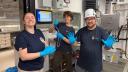
Klaar voor het nemen van CTD-monsters. Van links naar rechts: Ina, Clara, Luís.
Koralen, onderzeese bergen en herstel, Project REDRESS
Door Federicio Gigli, PhD student, NIOZ
Tijdens de wetenschappelijke expeditie AWB110 begonnen de teams die betrokken waren bij het REDRESS-project met de planning van de expeditie naar de Condor-zeeberg, gelegen op 10 zeemijl van het eiland Faial. De belangrijkste doelstellingen van de campagne waren: 1) geselecteerde locaties herstellen met eerder verzamelde, geacclimatiseerde en voor uitzetting voorbereide koraalbijvangst; 2) het uitvoeren van fysische en chemische analyses van de waterkolom door middel van CTD-metingen en waterfiltratiemethoden; en 3) het monitoren van de herstelinspanningen over een lange periode met behulp van een mini-ALBEX-lander die speciaal voor deze campagne was uitgerust met een reeks sensoren (HD-camera, ADCP, zuurstofsensoren, troebelheids- en fluorescentiesensoren). De voor de campagne geselecteerde gebieden werden vooraf besproken en vastgesteld op basis van historische gegevens over de onderzeese berg, met als doel zowel gebieden aan te pakken die eerder door visserij waren aangetast als gebieden die nog als ongerept worden beschouwd.
Het hoofddoel van het REDRESS-project is het begrijpen en implementeren van innovatieve methoden voor actieve herstelmaatregelen in Europese zeegebieden die eerder door antropogene belasting zijn aangetast. REDRESS richt zich op het implementeren van succesvolle herstelpraktijken en het verbeteren van het inzicht in diepzeeherstel, om zo een routekaart voor toekomstige herstelmaatregelen op te stellen. Tijdens deze campagne werkten we nauw samen met het Coral Ecophysiology Lab van de Azoren. Het NIOZ-team richtte zich op het monitoringaspect van het project met behulp van de nieuw ontworpen mini-ALBEX-landers, terwijl het team van de Azoren belangrijke technieken voor het uitzetten van koralen aanreikte, zoals de badmintonmethode, die voor het eerst in Spanje werd ontwikkeld en later op de Azoren werd toegepast om de aangetaste koraaltuinen te herstellen. De methode is gebaseerd op het uitzetten van koralen, die eerder als bijvangst door vissersschepen waren gevangen, door het effect van een badmintonbal na te bootsen. De koralen worden eerst met een niet-giftige tweecomponentenlijm aan keien bevestigd en vervolgens enkele meters boven de zeebodem voorzichtig losgelaten, waardoor ze zachtjes in een rechtopstaande positie neervallen.
De resultaten van de campagne zullen volgend jaar beschikbaar zijn, wanneer de lander wordt teruggehaald. Deze zullen belangrijke informatie opleveren over de milieudynamiek ter plaatse, evenals HD-video’s om het gedrag van het koraal tijdens het herstelproces te bestuderen.
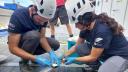
Diepzeekoralen voorbereiden voor plaatsing op de lander
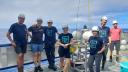
Het REDRESS team en bemanningsleden van de Anna Weber-van Bosse
Een theoretische visie in de praktijk
Door André de Roos, Director IBED Institute, University of Amsterdam
We varen nu al 10 dagen rond op de Atlantische Oceaan; vandaag is de laatste volledige dag voordat we terugkeren naar het eiland Terceira, dat deel uitmaakt van de Azoren. We bevonden ons weliswaar op de oceaan, maar nooit echt in de middle of nowhere; we hadden altijd een van de eilanden van de Azoren in het zicht. Deze eilanden liggen rond de Mid-Atlantische Rug, die blijkbaar deel uitmaakt van de langste bergketen ter wereld. Hier in de Noord-Atlantische Oceaan scheidt de rug de tektonische platen waarop Europa en Afrika liggen van de Noord-Amerikaanse plaat. De Azoren vormen zelfs het drievoudige knooppunt van deze drie platen. Langzaam, met 2,5 cm per jaar, drijven deze platen uit elkaar; zo zijn de Azoren ook ontstaan: door vulkanische activiteit rond de rug.
Net als de hoogte van bergen op het land varieert de hoogte van de bergen op de oceaanbodem – en daarmee de diepte van de oceaan – sterk over korte afstanden, van de 200 meter diepte bij de Condor Seamount tot dieptes van meer dan 1500 meter op korte afstand daarvan. En het zijn juist deze dieptes die we verkennen met dit nieuwe Nederlandse onderzoeksschip, de Anna Weber van Bosse. Het schip zelf is een schoolvoorbeeld van moderne technologie, met automatische systemen om het schip op exact dezelfde locatie te houden, systemen om de op-en-neergaande beweging van het schip te compenseren terwijl het door de golven wordt opgetild, en tal van geavanceerde computersystemen om de wereld onder ons te onthullen.
Die wereld onder het schip is het grote Onbekende dat door deze groep toegewijde wetenschappers aan boord wordt verkend met behulp van onderwatervideo-installaties, watermonsters om op verschillende dieptes eDNA te verzamelen en verankeringen die meer dan 1 kilometer vanaf de oceaanbodem omhoog steken en daar het hele jaar door blijven staan om de watertemperatuur op verschillende dieptes gedurende het hele jaar te meten, akoestische gegevens van vissen, dolfijnen en walvissen te verzamelen en met echoloden de abundantie en locatie van deze soorten te schatten.
Zelf ben ik theoretisch ecoloog en heb ik gegevens zoals die tijdens deze reis zijn verzameld, gebruikt voor mijn onderzoek. Maar ik had geen enkel besef van de inspanning, toewijding en doorzettingsvermogen die nodig zijn om deze gegevens te verzamelen. En toch vormen de verzamelde gegevens letterlijk slechts een fractie van wat er in de diepe oceaan te vinden is. Er wordt wel gezegd dat we meer weten over de maan dan over de diepe oceaan. Maar waar de maan slechts uit rotsen en stof bestaat, is de wereld onder ons vol leven, kleur en wezens met de vreemdste vormen en gestalten. Het frame met videocamera’s dat naar de zeebodem wordt neergelaten, geeft ons een realtime glimp van deze prachtige en betoverende wereld met koralen en sponzen die zachtjes worden bewogen door de waterstromingen, inktvissen, octopussen en vissen die snel wegschieten wanneer de camera’s dichterbij komen, nieuwsgierige dolfijnen die even komen kijken naar de camera, haaien die heel langzaam voorbijglijden en zwaardvissen die door het beeld schieten terwijl ze een van de dunne lijnen doorsnijden die aan het frame zijn bevestigd. Het zorgt voor lange dagen en lange nachten waarin we naar deze betoverende beelden kijken, terwijl de wetenschappers nauwgezet opschrijven wat ze op de camera’s waarnemen – niet anders dan Alexander von Humboldt zelf toen hij meer dan 200 jaar geleden de Chimborazo beklom.
Deelnemen aan deze expeditie is een ontzagwekkende ervaring geweest. Hoewel de wereld boven water hier op de oceaan nogal leeg lijkt – we hebben vooral vogels gezien, maar nooit in grote aantallen; we hebben een glimp opgevangen van walvissen en een behoorlijk aantal dolfijnen gespot – is de diversiteit en overvloed aan leven onder het wateroppervlak verbluffend. Het confronteert je voortdurend met deze prikkelende vragen die alle wetenschappers hier aan boord proberen te beantwoorden: Wat is daar allemaal te vinden? En hoe kan dit in hemelsnaam blijven bestaan? Wat is uiteindelijk de bron waardoor deze rijkdom in stand blijft? Vragen die nog steeds een enorme inspanning zullen vergen om te beantwoorden, maar die we nu kunnen beginnen te onderzoeken met de nieuwe Anna Weber van Bosse.
Softly rocking boat
Glides over the endless sea
Hiding unknown depths
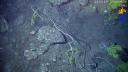
Twee rotsvissen in een koraaltuin op de Condor-zeeberg (Foto: NIOZ)
Linked staff
Fleur Visser
Senior onderzoeker

Furu Mienis
Senior onderzoeker
Federico Gigli
Onderzoeker in opleiding
Emma Bronswijk
Onderzoeker in opleiding
Jesse van der Grient
Junior onderzoeker (Postdoc)